
Table of Contents
- Introduction
- 1. AI-Based Subject Detection for Photos
- 2. Automatic Background Blur with AI
- 3. Comparisons: AI Blur vs Traditional Methods
- 4. Real-World Use Cases in Marketing and Lead Gen
- 5. Tools and Platforms Offering AI Blur and Subject Detection
- 6. Best Practices for Quality and Compliance
- FAQ
- Conclusion
Introduction
What is AI-driven subject detection?
AI-driven subject detection uses computer vision to identify key elements in an image, such as people, objects, or scenes. It separates the foreground from the background so you can edit each area independently. This enables precise and rapid isolation of the main subject.
With this technology, you can quickly select a subject and apply effects that enhance clarity, color, or depth, without manual tracing. It supports batch edits and helps maintain consistency across a project.
Why blur backgrounds with AI?
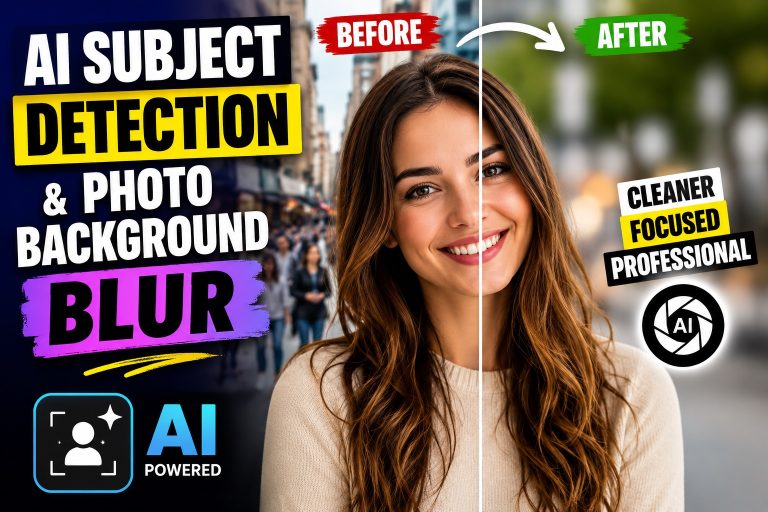
Blurring backgrounds with AI creates a polished look by simulating a shallow depth of field. The subject stays sharp while the surroundings soften, directing attention exactly where you intend.
AI-based blur delivers fast, repeatable results and adapts to different image compositions. It suits product photos, headshots, and marketing visuals without demanding complex workflows.
1. AI-Based Subject Detection for Photos
How AI identifies subjects in images
AI examines visual cues such as edges, textures, and color consistency to separate foreground from background. It analyzes the full image to spot elements like people, objects, or scenes that should stay sharp. The system then generates a mask that designates the subject area for focused processing.
Advanced models leverage contextual cues to distinguish multiple subjects within a frame, enabling targeted edits for each foreground element. This helps isolate one or more subjects without manual tracing.
Accuracy and edge cases in subject detection
Accuracy depends on image complexity. Clean portraits with clear subject-background contrast yield strong results. Busy backgrounds or silhouettes may require refinement.
Removing objects from photos has never been simpler or faster. Edge cases include overlapping subjects, translucent materials, or subjects that blend into the backdrop. In these scenarios, AI-assisted selection lets you adjust points on the subject to improve separation.
2. Automatic Background Blur with AI
How AI determines blur regions
AI uses the detected foreground to decide which background areas should recede. It analyzes edges and texture to separate the subject from surrounding elements and applies a Gaussian or similar blur to those regions. The result is a natural separation with the subject remaining sharp while the background softens.
Control over blur intensity and depth of field
Adjust blur strength to fit the scene. A light blur keeps more background detail, while a stronger blur emphasizes depth of field. Some tools let you preset depth cues based on distance or fine tune blur radius and transition smoothness to avoid halos.
- Intelligent region spreading reduces harsh edges between subject and background.
- Gradients help mimic real-world camera bokeh without complex editing.
- Separate foreground sharpness options preserve fine details like hair strands or jewelry.
3. Comparisons: AI Blur vs Traditional Methods
AI blur advantages over manual selection
AI-based blur streamlines subject isolation and background softening with minimal manual tracing. It handles fine details like hair wisps and translucent folds more efficiently than manual methods.
Automatic region detection reduces trial and error, delivering consistent results across large image sets. This is especially helpful for batch editing in campaigns.
- Faster turnaround for product photography and headshots
- Lower risk of halos or jagged edges around the subject
- Depth cues that resemble real depth of field
Limitations and when to choose traditional tools
AI blur can struggle in crowded scenes or when the subject blends with the background, which may require manual tweaks.
For precise control over edge handling, color masking, or custom blur shapes, traditional tools offer tactile adjustments and pixel-perfect masks.
- Edge finesse in complex composites
- Custom blur profiles and artistic effects not covered by automated tools
- Unusual lighting scenarios where manual refinement yields better realism
4. Real-World Use Cases in Marketing and Lead Gen
Product photography and ads
AI subject detection and background blur help product shots pop on screens. Isolating the product while softening the backdrop yields clean visuals that scale across catalogs and ads. This approach reduces retouch time and preserves consistent depth perception across images.
Marketers can quickly generate variants for campaigns. Swap backgrounds, test color contrasts, and keep the foreground product in sharp focus for a cohesive brand look. These tactics are part of valuable use cases in marketing and branding.
Profile pictures and sales outreach visuals
Profile photos benefit from crisp subjects against blurred surroundings. The technique yields headshots suitable for LinkedIn, corporate sites, or sales outreach materials without expensive studio setups.
For outreach, you can produce uniform visuals across teams. Consistent subject isolation and background treatment improves recognition and trust in email campaigns and pitch decks.
- Faster turnaround on catalog updates and social posts
- Lower production costs compared with traditional studio edits
- Better visual consistency across marketing channels
5. Tools and Platforms Offering AI Blur and Subject Detection
Overview of leading solutions
Many platforms now pair AI driven subject detection with background blur to speed up photo edits. You’ll find both broad editing suites that blend automatic subject isolation with blur tools and specialized features aimed at quick visual enhancement.
The landscape varies in ease of use, device reach, and export options. Some options suit solo creators on mobile, others support teams requiring batch processing and brand consistency. Prioritize formats like JPG, PNG, TIFF, and HEIC, plus workflows that move smoothly across devices.
Key features to evaluate
- Automatic subject detection with adjustable refinement points
- Smart background blur with controllable strength and depth cues
- Edge handling to minimize halos around fine details
- Batch processing support for large image sets
- Export options across formats and resolutions for web and print
- Privacy controls and local processing versus cloud processing
| Feature | What to look for | Impact |
|---|---|---|
| AI subject detection | Accuracy in varied lighting and complex backgrounds | Better foreground sharpness with fewer manual tweaks |
| Background blur control | Adjustable blur radius, depth cues, edge transitions | Realistic separation without artifacts |
| Platform availability | Web, iOS, Android, desktop integration | Flexible workflows across devices |
| Output formats | JPG, PNG, HEIC, TIFF, WEBP support | Easy publishing and reuse |
6. Best Practices for Quality and Compliance
Ensuring natural look
Aim for clean subject isolation with subtle boundaries to prevent halos and preserve texture. When unsure, sample several blur strengths on a small batch to identify a setting that reads as natural.
Align depth cues with the scene. Favor gradual transitions to mimic real focus and minimize visual distraction. Fine tune edge handling to keep details like hair and jewelry intact.
Privacy and ethical considerations
Respect consent when editing portraits or personal images. If permission is unclear, avoid altering identifiable traits or distributing visuals in ways that could misrepresent the subject.
Adhere to brand and content guidelines. In marketing visuals, ensure the background treatment does not obscure essential information or distort the depicted scene.
FAQ
How can I blur my background effectively?
Begin with precise subject isolation to minimize halos and preserve textures. Adjust the blur strength to create a realistic depth cue that preserves important details. If available, fine tune the focus point to emphasize the intended foreground.
Can I blur backgrounds on mobile?
Yes. Many AI blur tools are available as mobile apps or web editors. Look for features like real time previews, adjustable blur levels, and convenient sharing formats for social channels.
What factors affect AI blur quality?
Key factors include edge fidelity, realistic depth cues, and avoiding artifacts on fine details such as hair. Processing mode and export options can influence speed and how much detail is retained.
Is AI blur suitable for all images?
AI blur works well for portraits and product shots with a clearly defined subject. It can struggle with scenes that lack a distinct subject or have very complex backgrounds, where manual tweaks may be needed.
Conclusion
Summary of benefits
AI driven subject detection and automatic background blur streamline the editing workflow, delivering clean subject isolation and depth cues without specialized equipment.
For marketing visuals, the approach supports consistent foreground sharpness and adaptable exports across web and print, scalable from single images to large batches.
Future trends in AI photo editing
Expect refinements in edge handling and halo reduction as models evolve. Real time previews on mobile devices will speed up iteration for social content and outreach visuals.
Privacy considerations and on device processing will grow in importance for teams handling sensitive imagery. Look for closer integration with existing design tools and finer control over depth cues to fit creative intent.